

What Happens When You Hit Your Protein Goals For 90 Days Straight (And When You Don't)

An endocrinologist who has watched protein transform her patients’ metabolic health shares what the research and the clinic actually show.

Written By Dr. Rocio Salas-Whalen

Reviewed By Dr. Eric Trexler

Key Takeaways

  • Consistently hitting your protein goals reshapes body composition – especially when combined with exercise
  • After 40, protein needs start increasing. Most people in this age group aren’t consuming optimal amounts
  • Protein has a big impact on your hunger hormones, making it progressively easier to stay on track
  • The scale won’t tell you the full story. The real changes are in body composition, not just total weight

“In my practice, I see patients chasing every new intervention, including new medications, new diets, and new protocols. What I rarely see is someone who has simply eaten enough protein, consistently, for 90 days. When they do, the results aren’t subtle. And they’re not just about the mirror.”

Dr. Rocio Salas-Whalen
Endocrinologist and obesity specialist, author of Weightless

01

The First 30 Days: More Is Happening Than You Think

The Problem: Most people expect fast, visible results. When the mirror doesn’t change in two weeks, they quit. The first month of hitting your protein goals is less dramatic on the outside than what’s quietly happening on the inside.

The science: Within days of consistent adequate protein intake, your body shifts toward positive nitrogen balance, the state where muscle protein synthesis begins to outpace breakdown. This is especially true if you’re doing resistance training along the way. A meta-analysis confirmed a direct dose-response relationship between protein intake and gains in lean mass across randomized controlled trials. The adaptation starts in week one, but the visible proof takes longer.

Practical tips

  • Take a baseline measurement: not just weight, but waist circumference, strength, and how you feel at 3pm. This will help you see protein’s impacts more clearly
  • Distribute protein across all meals, not just dinner. 24-hour muscle protein synthesis is 25% higher when protein is evenly spread
  • Aim for at least 25g per meal as a practical starting target for most adults
02

What Happens to Your Muscle, Especially After 40

The Problem: After roughly 30, most people lose 3–8% of muscle mass per decade. They start seeing and feeling these changes by 40. By 60, the losses accelerate and it becomes clinically significant. It has a name: sarcopenia. And most people have never heard of it.

The science: Moderately increasing protein intake beyond the standard 0.8g/kg/day recommendation helps counteract progressive age-related muscle loss. A 2023 study confirmed that higher dietary protein was directly associated with less muscle loss in middle-aged and older adults. The target for adults over 40 is closer to 1.2–1.6g/kg/day – roughly double the standard recommendation. After about 60, the rate of muscle decline accelerates to roughly 5–10% per decade, and even higher when physical activity drops off alongside protein intake. Protein provides the raw material. Exercise provides the stimulus. Together, they produce results that neither can replicate independently.

Practical tips

  • Calculate your protein target by body weight, not guesswork: 1.2–1.6g per kg of bodyweight daily is the evidence-based range for young adults who exercise and all adults over 40
  • Pair consistent protein with resistance training. It is one of the most evidence-backed combinations in nutrition science. Neither alone produces what both together do
  • Prioritize leucine-rich sources like eggs, whey, fish, and legumes, which most directly stimulate muscle protein synthesis
03

What Happens to Your Hunger (This One Surprises People)

The Problem: Most people who watch their diet expect to fight hunger head on, and their plan is to white-knuckle it. What they don’t realize is that a high protein diet can change hunger itself. Not through willpower, but through hormones. This is the part nobody talks about at the start.

The science: Protein doesn’t just fill you up. It shifts hunger through multiple systems at once. GLP-1, PYY, and CCK levels are higher after a protein-rich meal than after carbohydrates or fat. Gastric emptying slows, extending the window before hunger returns. There is a phenomenon called protein leverage: the body actively regulates intake to meet its protein target, meaning that when protein is adequate, total calorie intake tends to decrease without deliberate restriction. At the brain level, adequate amino acid availability supports dopamine and serotonin signaling, affecting not just hunger but the reward response to food. Studies confirm that spontaneous calorie intake drops meaningfully on a high-protein diet even without intentional restriction. That’s why protein is such a powerful hunger fighter – it’s leveraging several mechanisms, all at once.

Practical tips

  • Eat protein at breakfast. It is the single highest-leverage meal for managing hunger across the entire day, and most people fall way short in the morning
  • Space protein across all meals. The appetite-regulating effects of GLP-1 and PYY are transient, so regular protein intake is important
  • Don’t confuse reduced hunger with “not working.” That decreased appetite is the adaptation you’ve been looking for

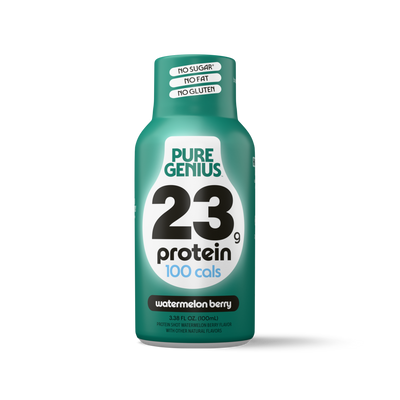
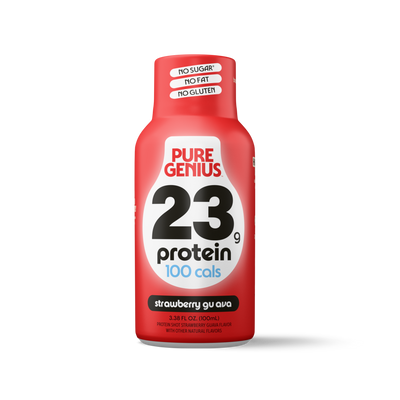
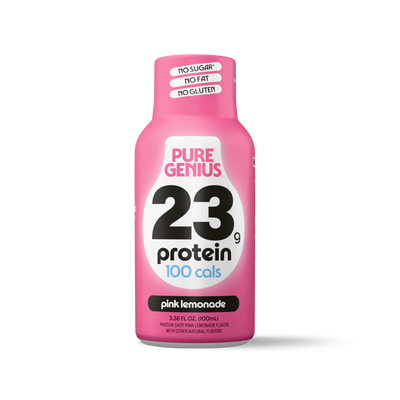
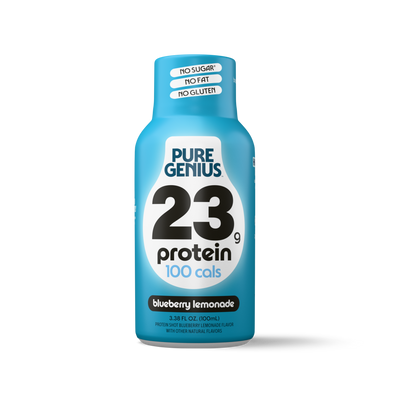
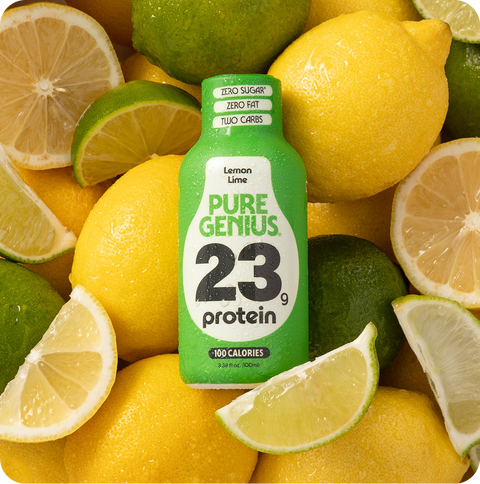
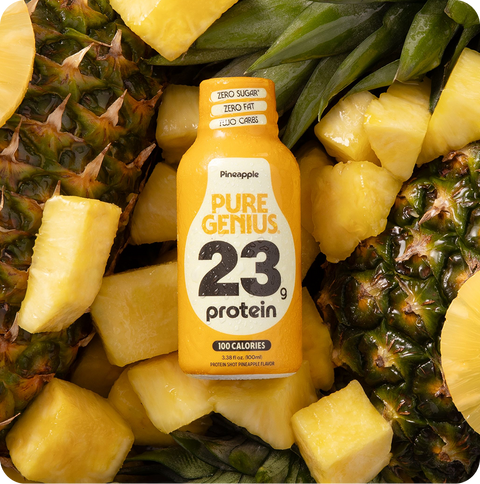
"Consistently hitting your protein target can change your body, but it is not always easy.

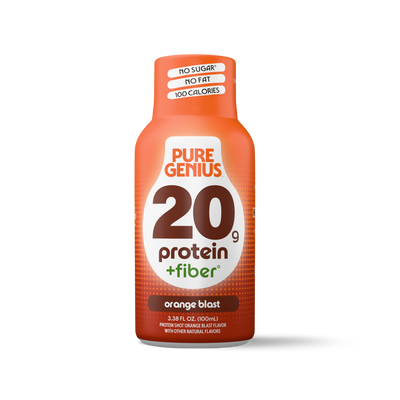
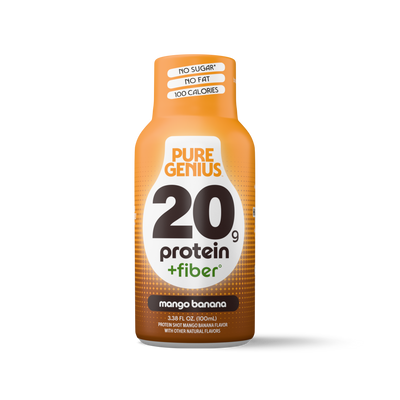
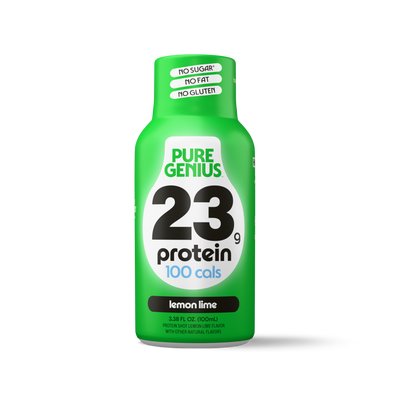
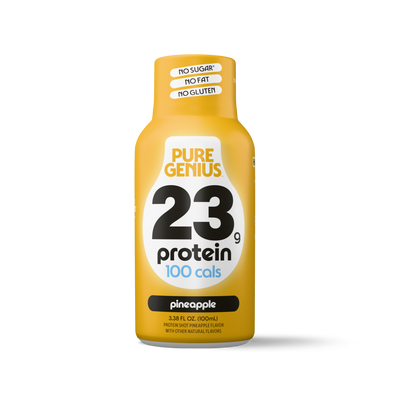
Pure Genius Protein makes it simple. It is clean, convenient, and designed to help you stay consistent without fillers or artificial sweeteners."

USE CODE DRROCIO FOR UP TO 35% OFF YOUR FIRST ORDER.

04

What Happens to Your Body Composition

The Problem: People measure success by the scale. But on a high-protein diet, you may lose fat while maintaining or gaining muscle, meaning the scale tells an incomplete and sometimes misleading story. The real data is in your body composition. Not your weight.

The science: Body composition changes at 90 days aren’t a separate story from sections two and three. They’re what happens when they compound over time. The hunger recalibration from consistent protein has been quietly reducing total calorie intake. Effects of protein have been helping you maintain (or even gain) lean muscle while preserving your metabolic rate. A randomized trial found that with comparable weight loss, women on a high-protein diet lost significantly less lean mass than those on a normal-protein diet. Protein has a markedly higher thermic effect than carbohydrates or fat, and it can minimize the drop in resting metabolic rate that typically accompanies caloric restriction. You lose fat. You keep muscle. Your metabolism doesn’t stall. That is what weeks of consistency produces.

Practical tips

  • Stop weighing yourself daily. Instead, measure waist circumference, strength, and how your clothes fit
  • Pair consistent protein with resistance training for a compounding effect on body composition
  • Don’t cut protein to lose weight faster. It is the most common and counterproductive mistake I see in my practice

The Bottom Line

Ninety days of consistent protein intake is long enough to produce real, measurable changes. But most people never make it to 90 days, because they’re measuring the wrong things in the first 30.

The research is clear: adequate protein isn’t just a fitness strategy. It’s a holistic health strategy impacting your hormones, metabolism, and body composition. As an endocrinologist, I would argue it’s one of the most powerful and underutilized tools available without a prescription. The challenge isn’t knowledge. It’s consistency.

Start tracking. Hit the target. Give it 90 days. The data and your body will tell the story.

About The Author

Dr. Rocio Salas-Whalen is an endocrinologist and obesity specialist with over 20 years of experience, including more than 20 years of lifting. She is the author of Weightless, a guide to metabolic health, hormones, and sustainable results for women at every stage of life.

She focuses on translating complex science into practical guidance and combines clinical expertise with personal experience in her work.

📩 Follow Dr. Rocio: @drsalaswhalen on Instagram  |  https://www.nyendocrinology.com/dr-salas-whalen

If you want to learn more about your metabolic and hormone health, check out Dr. Rocio Salas-Whalen's latest book, Weightless, on Amazon

If you want to learn more about your metabolic and hormone health, check out Dr. Rocio Salas-Whalen's latest book, Weightless, on Amazon